Email Personalisation: How to Make Better Email Marketing Campaigns
While some may consider email marketing old-fashioned, it continues to be a powerful tool in the digital world.
Surprisingly, it's still very effective.
Not convinced? Here’s something to think about: 77% of marketers have seen more people engaging with their emails in the last year.
This shows that email marketing can offer a strong return on investment and shouldn't be underestimated.
So, before you dismiss email marketing, take a closer look at its real benefits.
Are you familiar with all the best practices that can make your email campaigns a success?
Let’s dive into how this enduring method can enhance your marketing efforts.
The importance of email marketing
Email marketing is not only a fundamental element in digital communication but also an incredibly efficient investment.
A survey made by Litmus highlights its economic impact, revealing that email marketing yields an average return of $40 for every dollar spent. This outperforms the ROI from SEO and keyword ads, which stand at $22.24 and $17 respectively, underscoring the substantial value email marketing continues to offer.
Email marketing remains one of the most cost-effective ways to connect with customers, offering personalised engagement that many newer platforms can't match.
By allowing direct access to your audience's inboxes, email marketing provides a unique opportunity to deliver tailored messages that resonate on a personal level.
Benefits of email marketing
-
High ROI
Email marketing consistently delivers outstanding returns on investment, a key reason why it's so valued in business strategies.
This exceptional ROI example we mentioned above makes email marketing an essential tool for businesses of all sizes, particularly those looking to maximise efficiency and profitability with their marketing dollars.
It’s not just about the initial sale; well-crafted emails lead to higher lifetime customer values and ongoing engagement.
-
Personalisation and segmentation
The power of email marketing lies in its ability to address the individual. By segmenting your audience based on demographics, behaviour, or purchase history, you can create highly targeted messages that speak directly to the recipient's needs and interests.
This level of personalisation fosters a deeper connection between brand and customer, making messages more relevant and increasing the likelihood of engagement.
According to research, 96% of businesses see an improvement in their email marketing performance when they implement email personalisation strategies. This doesn’t just increase open rates—but also enhances the customer journey at every touchpoint.

-
Improving sales
Email marketing isn't just a powerful tool for engagement, it's also a significant driver of sales.
Email marketing isn't just a powerful tool for engagement, it's also a significant driver of sales.
Remarkably, 59% of marketers identify email as their top source of return on investment, and those who employ segmented campaigns have seen revenue spikes up to 760%. Email campaigns can highlight your products or services, nudge customers towards purchases they previously hesitated on, and roll out special offers that capture their interest.
Additionally, the same percentage of respondents from a recent survey noted that marketing emails directly influence their buying decisions. This means that well-crafted email campaigns can effectively persuade subscribers—who have already shown interest by signing up—to make a purchase.
You can also streamline your sales process using email automation, further enhancing your ability to convert leads into sales efficiently.
-
Builds relationships
Emails provide a unique opportunity to build and nurture relationships with your customers.
For marketers, enhancing communication with your audience is essential. When people feel connected to your brand and believe they can easily reach out to you, they're more inclined to stay loyal.
Consider the impact of a well-crafted email from a favourite brand. It’s hardly ever seen as an interruption but rather as a welcome update. Reflect on the last such email you received—chances are, it made you feel more connected to the brand and kept you informed about what’s new.
Email marketing extends your reach, allowing you to engage effectively with your audience and brand enthusiasts. It ensures your audience stays engaged with your brand throughout the year, regardless of whether it's a peak or off-peak season.
-
Supports other marketing initiatives
Email marketing plays a crucial supportive role to other marketing channels.
It can drive traffic to your latest blog posts, increase attendance at events, bolster social media campaigns, and even enhance the performance of paid advertising by retargeting interested customers.
By integrating email marketing into your overall digital strategy, you create a cohesive and unified user experience that amplifies the impact of all your marketing efforts.
Email acts as a connector, linking various aspects of your marketing mix and creating multiple touchpoints with your audience.
Overall, email marketing offers a versatile, powerful tool that goes beyond sending messages—it's about creating a holistic strategy that supports and amplifies your entire marketing ecosystem.

-
Driving traffic to your website
When you've crafted compelling content, the next step is getting it in front of your audience. Email is often the go-to method for this.
Through targeted email marketing campaigns, not only can you boost traffic to your website—enhancing your SEO in the process—but you also maintain your audience's interest in your brand and offerings.
Take, for example, how you might have arrived at this page: a direct link in a HubSpot email. This is a prime example of how effective email can be in delivering valuable content to our audience, driving traffic directly back to our site.
Remember, when designing emails that link to your content, to include a clear call to action. This encourages readers to engage further by visiting your website, where they can explore more of what you offer.
-
Executing timely campaigns efficiently
Traditional marketing campaigns serve their purpose but often require extensive planning that can span months. Even with all that preparation, there's no guarantee your audience will see your materials when most impactful.
Email marketing offers a more agile solution. You can roll out a full campaign with much shorter lead times, making sure it reaches your audience precisely when needed.
By segmenting your audience, you can further refine this timing, ensuring that the right people receive the right content at just the right moment. This targeted approach helps maximise the impact of your campaigns.
-
Boosting lead generation
Similar to enhancing sales, email marketing is a powerful tool for increasing your leads. Using the inbound approach, it serves to nurture leads and boost conversion rates.
Imagine you download a lead magnet from a website. Soon after, you begin receiving a series of drip emails that gradually pique your interest until you decide to book a demo to discover more. This progression effectively moves you from a Marketing Qualified Lead (MQL) to a Sales Qualified Lead (SQL), thus enhancing the quality of leads passed from marketing to sales.
Email campaigns also help in further qualifying these leads, ensuring your sales team focuses their efforts on the most promising prospects. Moreover, if your company utilizes lead scoring, you can monitor whether leads are engaging with your emails, such as opening them or clicking on links, to continually refine your targeting and follow-up strategies.

-
Creating cost-effective campaigns
Email marketing stands out as a more budget-friendly alternative to traditional methods like direct mail or print advertising, which can quickly become expensive.
Consider this: with email marketing, you eliminate the need for costly photoshoots, location fees, printing, mailing, and ad placements. Essentially, all you need is a talented copywriter and a graphic artist—sometimes just one multitasking team member can handle both roles if you're using stock images.
What's more, email campaigns are quick to assemble. You could potentially draft and send an email within a single day, making it a far more efficient choice compared to the lengthy and costly process involved in traditional campaign productions.
-
Delivering enhanced value to your audience
A core objective for any business is to continually deliver value to their audience, encouraging them to return time and again.
Email marketing excels as a tool for nurturing loyalty among your customers by offering ongoing value, even when they are not actively making purchases.
Because your customers and prospects have chosen to opt-in, email marketing allows you to offer additional resources and information to those genuinely interested in your content.
By consistently providing valuable content through your emails, you'll capture more attention and, ultimately, see an increase in your return on investment (ROI).
-
Leveraging email for effective self-promotion
Self-promotion can be tricky, particularly in spaces where your audience hasn't explicitly agreed to receive updates from you. Yet, promoting your brand effectively is crucial for attracting customers; if people don’t know about your offerings, they won’t engage with them.
Email marketing provides a strategic platform for self-promotion, precisely because it reaches an audience that has already shown interest by opting in. This setup allows you to freely share updates about new products, enhancements, and content without the worry of being intrusive. With customers already curious about what you have to offer, your promotional messages are both expected and welcomed, making each campaign an opportunity to strengthen your brand’s presence and appeal.

-
Taking control of your media and contact lists
When you rely on social media platforms, you don’t actually own your contact list or the content you post; everything is under the control of the platform itself.
Consider this: if social media platforms disappeared overnight, how many followers and potential customers would vanish along with them?
This scenario underscores the importance of building your own email list. Unlike social media, an email list is a database you fully control. You can communicate with your contacts on your terms, irrespective of the email provider, and you also retain ownership over the content you create and distribute.
Email marketing remains a vital strategy not only for reaching your audience where they are most receptive but also for enhancing your sales and lead generation efforts. It’s clear that email marketing is far from obsolete—it’s essential.
-
Boosting brand awareness through email marketing
Email marketing is an effective tool for increasing brand awareness by ensuring regular, direct communication with your target audience right in their inboxes. Through the consistent delivery of valuable content—be it promotional offers, informative newsletters, or the latest product updates—you not only foster relationships with your subscribers but also keep your brand prominently in their minds.
Incorporating social media links into your emails can further extend your reach, as subscribers are encouraged to share your content, broadening your brand’s exposure. Moreover, the analytics provided by email marketing campaigns offer deep insights into how your audience interacts with your content. These metrics are invaluable for continuously refining your strategy to achieve the best possible outcomes.
-
Gaining deeper insights into your audience
Understanding your audience is crucial, and email marketing provides a wealth of data to help you do just that. By monitoring metrics like email open rates, click-through rates, and conversion rates, you can pinpoint the types of content and messaging that resonate most with your subscribers. Additionally, collecting data through sign-up forms and tracking interactions with social media links in your emails can provide a clearer picture of your subscribers' demographics, preferences, and behaviours.
Armed with this knowledge, you can fine-tune your email list segmentation, enabling you to tailor your content more effectively to meet the specific needs and interests of different audience segments. Continuously refining your understanding of your audience through these insights enhances your targeted marketing strategies, ultimately leading to improved outcomes for your business.
Building an email list
Building a robust email list is a fundamental aspect of a successful email marketing strategy.
An engaged and targeted email list not only boosts the effectiveness of your campaigns but also enhances the overall ROI.
Here's how you can grow your email list with some effective strategies:
Effective list-building strategies
Offer value through content
One of the most effective ways to encourage people to sign up for your list is to offer them something valuable in return. This could be exclusive access to your content, special offers, or insider news that they would not receive elsewhere. Ensure that the content is directly relevant to your target audience’s interests or needs.

Utilise social media platforms
Promote your email sign-up forms on your social media platforms. Use engaging posts and even paid ads to reach a broader audience who might be interested in your newsletters or offers.
Host webinars or live events
Events like webinars or live streams can be a great incentive for people to sign up. Offer free registration to these events in exchange for email addresses, and make sure the content of the event is compelling enough to attract the right audience.
Using lead magnets
Lead Magnets are tools used to generate consumer interest or inquiry into products or services. A lead magnet provides value for the visitor in exchange for their contact information. Common examples of lead magnets include free guides, eBooks, white papers, free consultations, quizzes, and discount codes.
The key to a successful lead magnet is that it must offer something irresistible and specific to your audience that they can use immediately.
Landing pages and opt-in forms
Landing pages are standalone web pages created specifically for a marketing or advertising campaign. It’s where a visitor lands after they click on a link in an email, or ads from Google, Bing, social media, or similar places on the web.
Effective landing pages make use of concise, engaging content and striking visuals to encourage visitors to complete a specific action, like filling out a form.

Opt-In Forms are crucial for capturing the necessary contact details to build your email list.
These forms should be strategically placed where they’re most likely to catch the attention of your visitors, such as on your homepage, blog posts, and high-traffic landing pages. It’s essential that these forms are as straightforward as possible, asking only for essential information like name and email address to lower any barrier to entry.
In summary, building an email list is about strategically placing the right tools and offers in front of the right people. Using lead magnets effectively and optimising your landing pages and opt-in forms will help you grow a list that is not only large but filled with engaged and interested subscribers who are more likely to respond positively to your email campaigns.
Crafting compelling email content
Creating email content that captivates and converts is central to any successful email marketing campaign.
This involves not only crafting engaging text but also designing visually appealing emails that function effectively across all devices. Here’s how to master both aspects of your email content.
Writing engaging emails
-
Subject lines that increase open rates
Your subject line is your first impression, and making it count can significantly impact your open rates.
Use clear, concise language that piques curiosity or offers immediate value. Phrases like "Unlock your exclusive offer" or "Tips to revolutionize your routine" can draw readers in.
Testing different subject lines through A/B testing can help you understand what resonates best with your audience.
-
Crafting the perfect email body
The body of your email should deliver on the promises made in your subject line, providing valuable content that's relevant to the reader. Use a friendly, conversational tone and break the text into manageable sections with subheadings and bullet points to enhance readability.
Always include a clear call-to-action (CTA) that guides recipients on what to do next, whether it’s visiting a website, signing up for a webinar, or making a purchase.
Designing email templates
When it comes to email design, consistency and clarity are key. Effective email designs typically feature:
- A clean, simple layout that aligns with your brand’s visual identity.
- High-quality images that complement the text without overwhelming it.
- Balanced use of colours that enhance readability and draw attention to key actions.
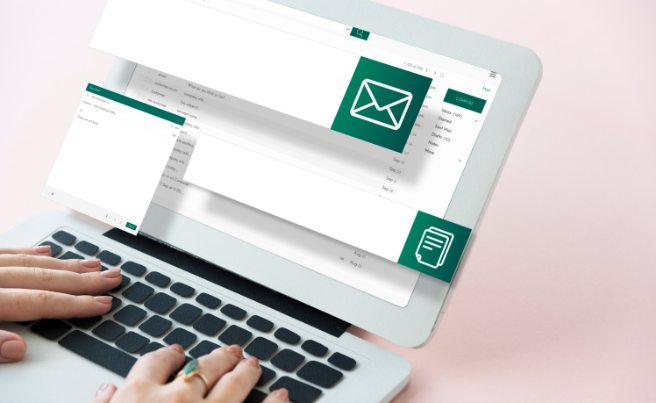
Here are examples of effective email designs:
- A minimalist template that uses bold headers and a single column layout to focus attention on the message.
- A promotional email that combines vibrant colours and large product images to create excitement.
- A newsletter format that segments content into clearly defined blocks, making it easy to scan for information.
Best practices for email design
- Keep it simple: Use a clean design that focuses on your message rather than elaborate graphics that might distract.
- Stay on-brand: Ensure your email design reflects your brand identity with consistent use of logos, colours, and fonts.
- Optimise your CTA: Your call-to-action should be prominent and clear, encouraging readers to take the next step.
Responsive design for mobile
With the majority of emails now opened on mobile devices, responsive design is not just a best practice—it’s a necessity. Responsive email design ensures that your content looks great and functions perfectly on any device, adjusting layout and content size based on the screen. This includes:
- Scalable images: Ensure that images resize automatically across devices.
- Touchable CTA buttons: Make them large enough to be easily tapped with a finger.
- Readable text size: Use fonts that are legible on smaller screens without zooming.
By focusing on these elements, you can create email content that not only looks great but also performs well, engaging your readers and encouraging them to take action.
What is email personalisation?
Email personalisation tailors email campaigns to individual subscribers by utilising the data you have on them, such as their first name, recent purchases, location, or how often they use your app.
Personalisation in email marketing varies in complexity. At a basic level, it involves incorporating a subscriber's name into the subject line.
While the more advanced personalisation adjusts the email’s content based on detailed factors like the subscriber's gender or location.
Implementing personalisation in your email campaigns has been proven to boost open and click-through rates, significantly impacting both ROI and revenue.
Research indicates that emails with personalised subject lines are 26% more likely to be opened. Furthermore, a study by Rich Relevance reveals that personalized emails can generate revenue that is 5.7 times higher than non-personalised ones.
These impressive results are due to the increased relevance of personalised emails. Rather than receiving generic campaigns, subscribers get messages that are directly targeted at them, incorporating their names and offering promotions or products tailored to their specific interests.
Dynamic content in emails
When businesses incorporate dynamic content into their emails, they offer subscribers a more tailored experience.
In today's market, many consumers are willing to exchange personal data with brands for a highly personalised shopping experience and tailored product recommendations.
Employing this strategy can give your business a competitive edge in the crowded inbox space, foster enduring relationships with your audience, streamline processes to save time, and enhance revenue generation.
Setting up email automation
Email automation involves setting up email systems to send messages automatically based on specific triggers or schedules.
This not only saves you time but also ensures that your messages are timely and relevant.

-
Welcome emails
Automate a welcome email for new subscribers. This initial contact should thank the subscriber for signing up and provide valuable information about what they can expect from your emails.
-
Transactional emails
These include order confirmations, shipping notifications, and other emails that are triggered by a customer’s actions. Automating these emails ensures that customers receive timely updates, enhancing their experience with your brand.
-
Re-engagement campaigns
Set up automation to send emails to subscribers who have not engaged with your emails for a certain period. These messages can invite them to provide feedback, offer them a special discount, or simply remind them of the benefits of your products or services.
-
Birthday or anniversary emails
These are scheduled based on the date information provided by the subscriber. Sending a personalised greeting or a special offer on these dates can greatly enhance customer loyalty and satisfaction.
In conclusion, integrating personalisation and automation into your email marketing strategy can dramatically improve the efficiency and effectiveness of your campaigns.
By delivering relevant content at the right time, you can engage customers on a deeper level and drive meaningful results for your business.
Inspire elevates customer engagement with expert email personalisation

To maximise the impact of your email marketing campaigns, it's crucial to offer recipients an exceptional experience with your brand.
The core goal of any robust marketing strategy is to communicate effectively with your customers, rather than bombarding them with constant sales pitches.
Email personalisation is essential to achieve this aim, ensuring that every message you send is perfectly tailored: the right message with the right promotion at the right time.
To achieve this level of precision in email personalisation, you need a comprehensive solution that integrates a real-time customer data platform with intelligent marketing automation.
Our team at Inspire provides everything you need to enhance your email marketing efforts, featuring advanced targeting capabilities and AI-driven personalisation, all while maintaining high deliverability and ease of use.
We ensure a customer-centric approach in every campaign, leveraging valuable insights from your customers' behaviours to target the right audience with timely, dynamic, and relevant emails.
Interested in discovering how Inspire can help elevate your business through superior email campaigns? Get in touch with us today and explore the transformative possibilities we offer.